SDG-3 Acceleration Roadmap
Reaching the global Sustainable Development Goal 3 (SDG 3) targets by 2030 requires a bold, accelerated approach to overcome persistent systemic barriers
SDG 3 Acceleration · Ethiopia
Building a resilient future of health — and closing the gap to 2030
Ethiopia has achieved remarkable gains in health outcomes over the past two decades, successfully expanding access to essential services and reducing mortality. But reaching the global Sustainable Development Goal 3 targets by 2030 requires a bold, accelerated approach to overcome persistent systemic barriers.
Amref Health Africa is partnering with the Ministry of Health (MoH) on a strategic initiative to evaluate progress, identify bottlenecks, and chart a clear, evidence-based roadmap for health system transformation.
The Challenge
Progress is real — but it is uneven
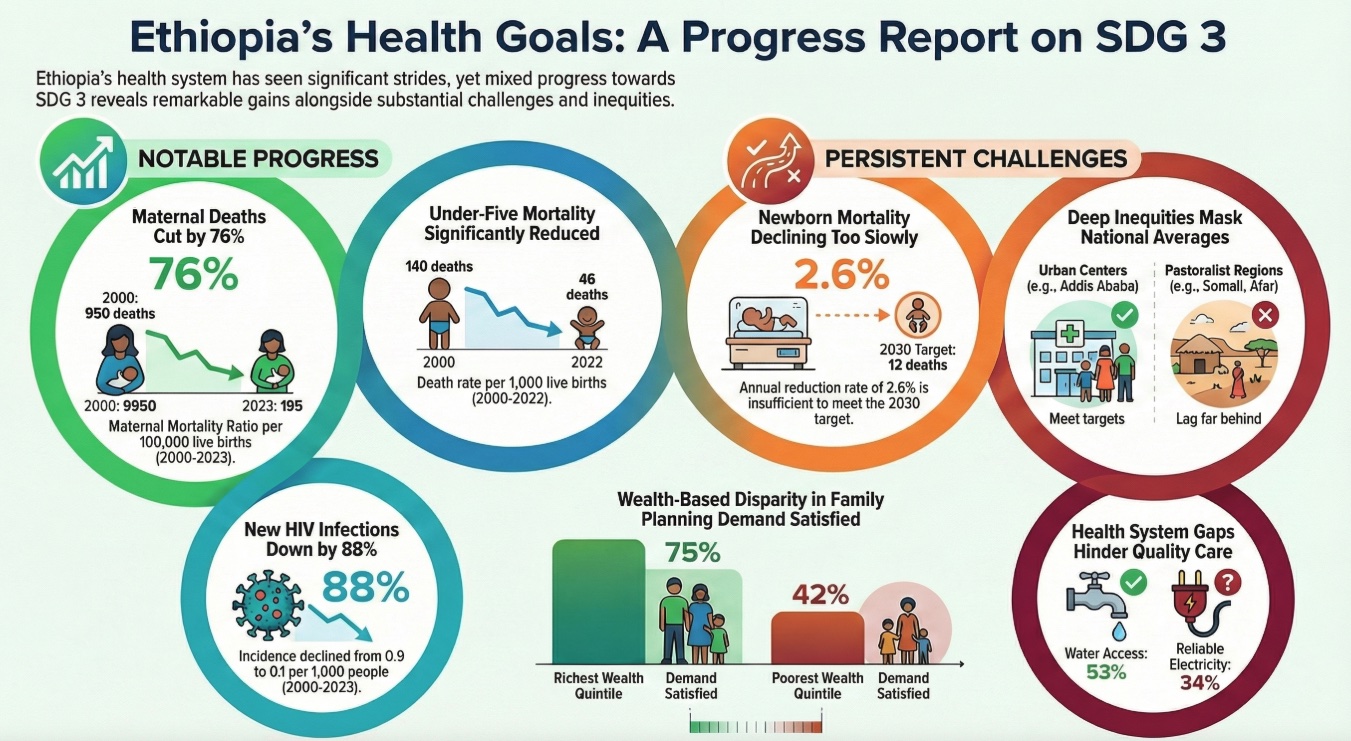
Ethiopia is on track to meet its national targets on three major indicators. Most others are lagging — and the national average hides how wide the difference has become.
National targets within reach
Where acceleration is needed most
Persistent Inequities
National success masks profound local gaps
Urban centres
Areas like Addis Ababa perform near target levels across most indicators.
Pastoralist and rural regions
Face critical shortages and high mortality rates — the reality the national average conceals.
Systemic Weaknesses
Three constraints on the whole system
Workforce imbalances, insufficient financing, and inadequate infrastructure limit what every other intervention can achieve.
Workforce imbalances
Health workers are unevenly distributed, leaving the regions with the highest need the most thinly staffed.
Insufficient financing
Available resources fall short of what accelerated progress toward the 2030 targets demands.
Inadequate infrastructure
Basic utilities are missing in roughly half of all health facilities — before any clinical care begins.
Health facility readiness
Facilities with improved water
Facilities with electricity
Almost half of Ethiopia’s health facilities operate without improved water or a reliable power supply.
The Opportunity
High-impact acceleration — and the lives it would save
Our analysis demonstrates that strategic focus and accelerated investment can close the remaining gaps. Saving Lives by 2030: Scaling up proven, high-impact interventions could avert thousands of preventable deaths. Scenario modeling shows that focused efforts could avert:
Maternal deaths
Through scaled-up management of obstetric emergencies and comprehensive maternal care.
Neonatal deaths
The single largest gain available — and currently the slowest-moving indicator.
Child deaths
Driven largely by routine immunization and treatment for diarrhea and pneumonia.
Prioritized Interventions
A consistent core package of care
The majority of averted deaths rely not on new technology, but on delivering a known set of interventions reliably, everywhere.
A Roadmap for Resilience
Six strategic areas for national action
Recommendations emphasize adopting a national roadmap built around six strategic areas — among them:
Responsive leadership
Governance that can act on evidence quickly and hold delivery to account.
Improved service delivery
Getting the core package to every facility, at consistent quality.
Shock-sensitive programming
Services designed to keep functioning through drought, conflict, and displacement.
Enhanced partnerships
Government, partners, and communities aligned behind one set of priorities.
The Way Forward
An evidence-based roadmap for health system transformation
Working with the Ministry of Health, we are turning this analysis into targeted action — so that acceleration reaches the regions and indicators still furthest from the 2030 targets.
Explore the initiative