SDG 3 Acceleration in Ethiopia: Building a Resilient Future of Health
Ethiopia has achieved remarkable gains in health outcomes over the past two decades, successfully expanding access to essential services and reducing mortality. However, reaching the global Sustainable Development Goal 3 (SDG 3) targets by 2030 requires a bold, accelerated approach to overcome persistent systemic barriers.
Amref Health Africa is partnering with the Ministry of Health (MoH) on a strategic initiative to evaluate progress, identify bottlenecks, and chart a clear, evidence-based roadmap for health system transformation.
--------------------------------------------------------------------------------
The Challenge: Progress is Uneven
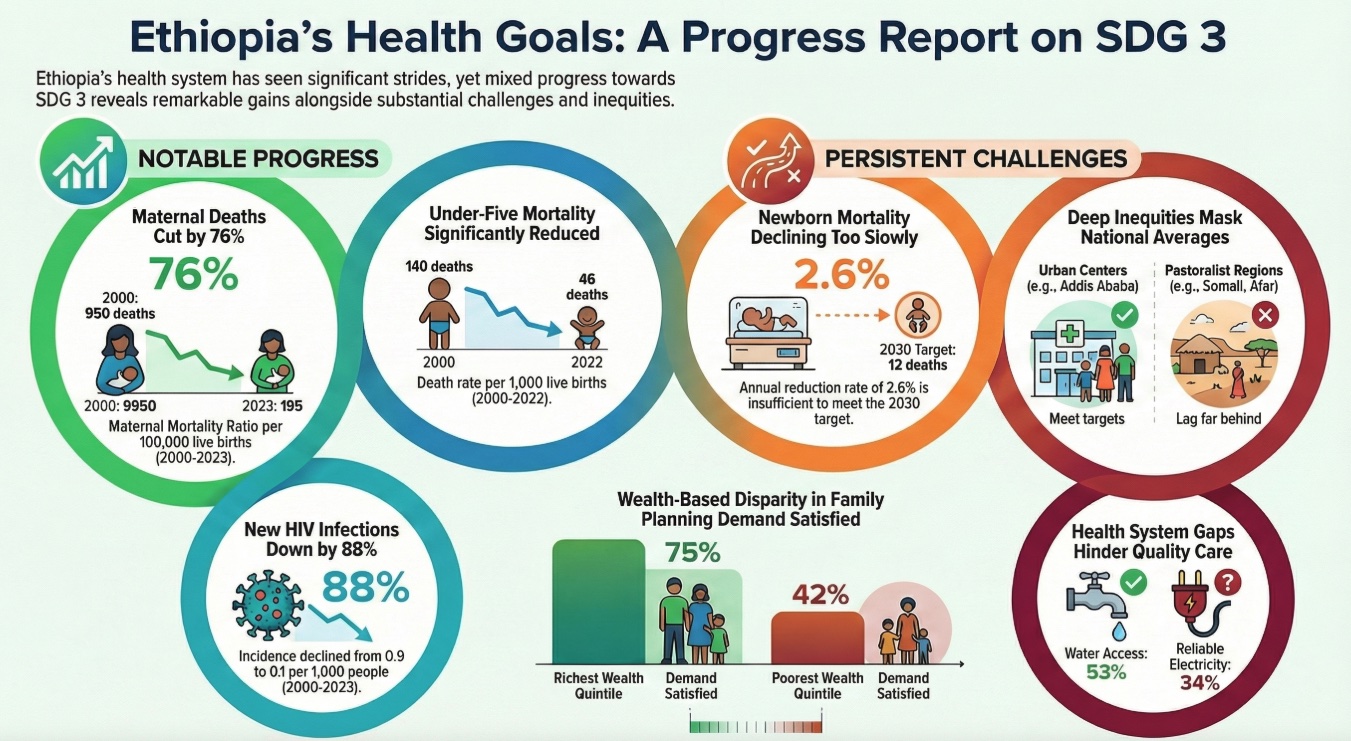
While Ethiopia is on track to meet its national targets for reducing Maternal Mortality Ratio (MMR), Under-Five Mortality Rate (U5MR), and HIV incidence, most other health indicators are lagging.
• Lagging Indicators: Progress is notably slow in reducing neonatal mortality, TB and malaria incidence, and child malnutrition (stunting/wasting), low CPR coverage with high unmet needs, and high teenage pregnancy
• Persistent Inequities: National successes often mask profound gaps. Urban areas like Addis Ababa perform near target levels, yet pastoralist and rural regions face critical shortages and high mortality rates.
• Systemic Weaknesses: The health system is constrained by workforce imbalances, insufficient financing, and inadequate infrastructure (only 53% of facilities have improved water, 54% have electricity).
--------------------------------------------------------------------------------
The Opportunity: High-Impact Acceleration
Our analysis demonstrates that strategic focus and accelerated investment can close the remaining gaps:
• Saving Lives by 2030: Scaling up proven, high-impact interventions could avert thousands of preventable deaths. Scenario modeling shows that focused efforts could avert up to 4,100 maternal deaths, 35,500 neonatal deaths, and 41,000 child deaths in the year 2030 alone.
• Prioritized Interventions: The majority of averted deaths rely on a consistent core package of care, including:
◦ Maternal Health: Postpartum hemorrhage (PPH) management, pre-eclampsia treatment, and safe abortion care.
◦ Neonatal Health: Neonatal resuscitation, management of sepsis, and Kangaroo Mother Care (KMC).
◦ Child Health: Routine childhood vaccinations (like Hib and PCV), and treatment for diarrhea (ORS/zinc) and pneumonia.
• A Roadmap for Resilience: Recommendations emphasize adopting a national roadmap focused on six strategic areas, including responsive leadership, improved service delivery, shock-sensitive programming, and enhanced partnerships.